

The demands on foam fabricators are shifting. OEM engineers need custom solutions faster, with tighter tolerances, lower material waste, and growing requirements for sustainable materials. The market is responding, and three fabrication practices are at the center of this change.
Advancing foam waterjet cutting, precision CNC routing, and sustainable foam converting are shaping how fabricators will meet that pressure. Here is what each means for manufacturers who rely on custom foam components and how Amcon remains at the forefront of foam fabrication.
1. Advancing Foam Waterjet Cutting
Waterjet cutting is not new. It has been a proven fabrication method for years, valued for a fundamental set of advantages. Foam waterjet cutting uses high-pressure water to slice through material cleanly, with no heat, no tooling, and no material deformation. It cuts complex shapes across a wide range of foam types without introducing thermal stress or requiring expensive dies. What is changing is the technology running it.
Digital controls, automation integration, and multi-axis cutting capability are expanding what waterjet systems can do and how efficiently they do it. Tighter tolerances, more complex geometries, and faster turnaround are all outcomes of that advancement. Consistent edge quality across complex profiles and thick cross-sections improves with each generation of cutting system. The core advantage of cold, tooling-free cutting that foam fabricators have relied on for decades stays intact.
According to Credence Research, the global foam cutting machines market is projected to grow from $175 million in 2024 to $283 million by 2032, a 6.2% compound annual growth rate. CNC and waterjet systems are driving that expansion through their ability to meet industrial automation demand and deliver repeatable precision in complex shapes.
Where Amcon Stands Today
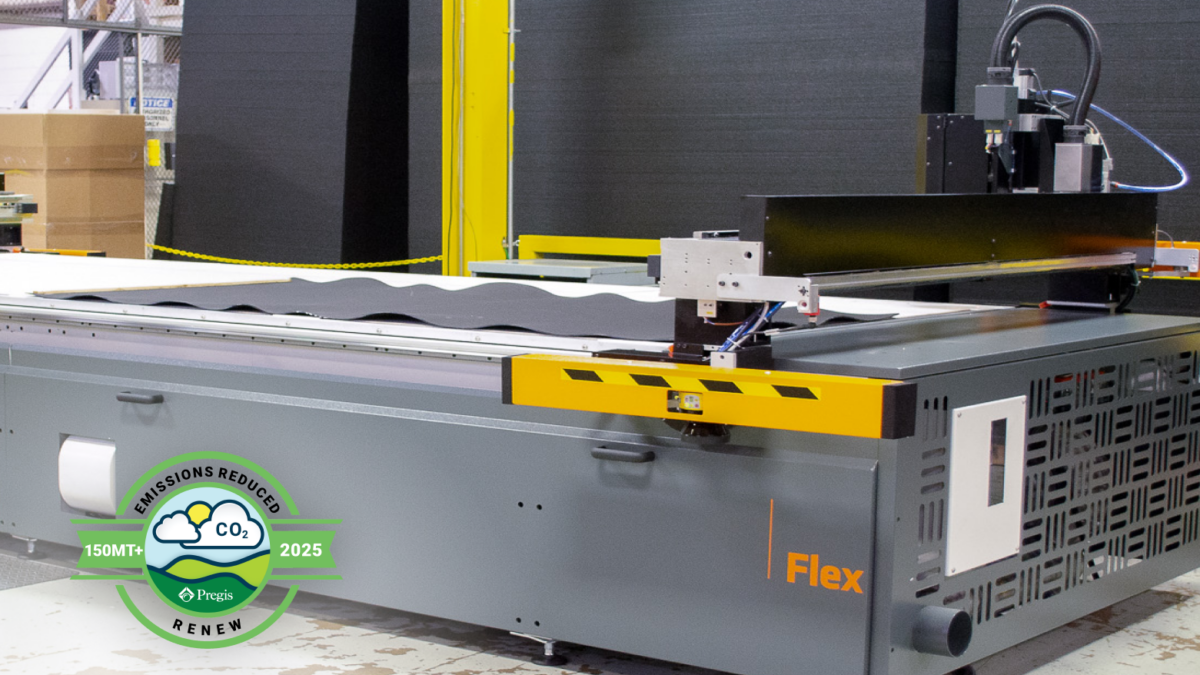
Amcon already operates ahead of the regional curve on waterjet capability. Our facility runs five waterjet machines, including the only 5-axis waterjet cutting machine in our area, with 20 or more cutting heads across our Minnesota and Colorado locations.
For clients with high-mix programs or frequent design revisions, that equipment depth translates directly to shorter lead times and lower per-part cost.
2. Advanced CNC Routing for Complex Foam Components
CNC routing has been the standard for multi-depth cavities, tight-tolerance inserts, and precision packaging geometry for years. What is changing is how CNC is integrated into broader converting workflows and supported by digital design tools.
The most capable fabricators are moving away from routing as a standalone process and toward coordinated converting operations, where CNC routing, waterjet cutting, die cutting, contour cutting, skiving, and lamination are selected and sequenced based on the specific geometry, volume, and performance requirements of each project. Sequencing processes this way improves operational efficiency. CAD-driven design and 3D modeling are the enabling layer, allowing engineers to verify fit and dimensional accuracy before production scales.
For OEM engineers and packaging designers, this means fewer revision cycles, better first-article accuracy, and parts that are engineered for how a product is used, assembled, or presented. Dimensional correctness is the floor, not the ceiling.
How Amcon Applies CNC Routing
Amcon’s CNC routing and pattern cutting capabilities are integrated into a full-service converting operation. Specific advantages include:
- Integration across cutting methods: CNC routing is paired with waterjet, die cutting, contour cutting, skiving, and lamination to select the best fabrication approach for each project.
- Engineered multi-component designs: For complex kitting, multi-layer packaging, and foam insert projects, CNC routing produces precise patterns aligned with how the product is used and assembled.
- Prototype-to-production support: Design revisions, nesting optimization, and process selection are handled across the full project lifecycle.
- CAD-driven accuracy: 3D modeling and CAD-based layouts verify cavity depths, component spacing, and fit before production scales.
- Material-neutral expertise: CNC routing at Amcon is compatible across polyethylene (PE), cross-linked polyethylene (XLPE), polyurethane foam (PU), expanded polyethylene (EPE), expanded polypropylene (EPP), and specialty foams, with material selection driven by load, durability, shock-absorption, and presentation requirements.
3. Sustainable Foam Converting
Material sustainability is no longer a secondary specification. Regulatory pressure, procurement requirements, and customer expectations are pushing manufacturers to evaluate foam materials through an environmental lens alongside traditional performance criteria.
Market Research Future projects the engineered foam market will grow from $183 billion in 2024 to $344 billion by 2035 at a 5.92% CAGR, with sustainability demands and technological advancement as the primary drivers and packaging and automotive sectors leading growth.
Foam Expo North America reports that the industry is moving decisively toward closed-loop recycling and bio-based materials, with chemically recycled polyurethanes and plant-derived foam formulations expanding the options available to design engineers. Regulatory pressure around PFAS and legacy chemicals is accelerating that shift.
Archive Market Research finds that customization is driving the next phase of development. Manufacturers are working directly with end-users to develop bio-based formulations tailored to specific applications, rather than adapting general-purpose materials to demanding use cases.
Amcon’s Approach to Sustainability
Amcon was recognized with a 2025 Pregis Purpose Award for reducing carbon emissions by 150 metric tons. That recognition reflects commitments built into how we operate every day.
Amcon’s sustainability principles include:
- Specifying the lowest practical mass and density for each package design
- Leading with highly recyclable products and materials with the highest available recycled content
- Maintaining internal recycling processes for all post-production materials
- Designing for maximum protection with minimum material required
- Continuously improving manufacturing process yields to minimize material waste
When bio-based or recycled-content foams meet the mechanical, chemical, and dimensional requirements of an application, our engineers recommend them. Material selection is always performance-driven. Sustainability is a factor in that evaluation.
Staying Ahead of What the Industry Demands
We track these developments not to follow trends, but to ensure clients have access to the right material and the right process for every application. Advancing foam waterjet cutting, integrated CNC converting, and sustainable foam converting all represent real performance and cost advantages for the manufacturers we serve.
Contact Amcon Foam to discuss your project. Our team will identify the fabrication approach and material specification that fits your geometry, volume, and performance requirements. That is custom foam manufacturing built around your specific application.