

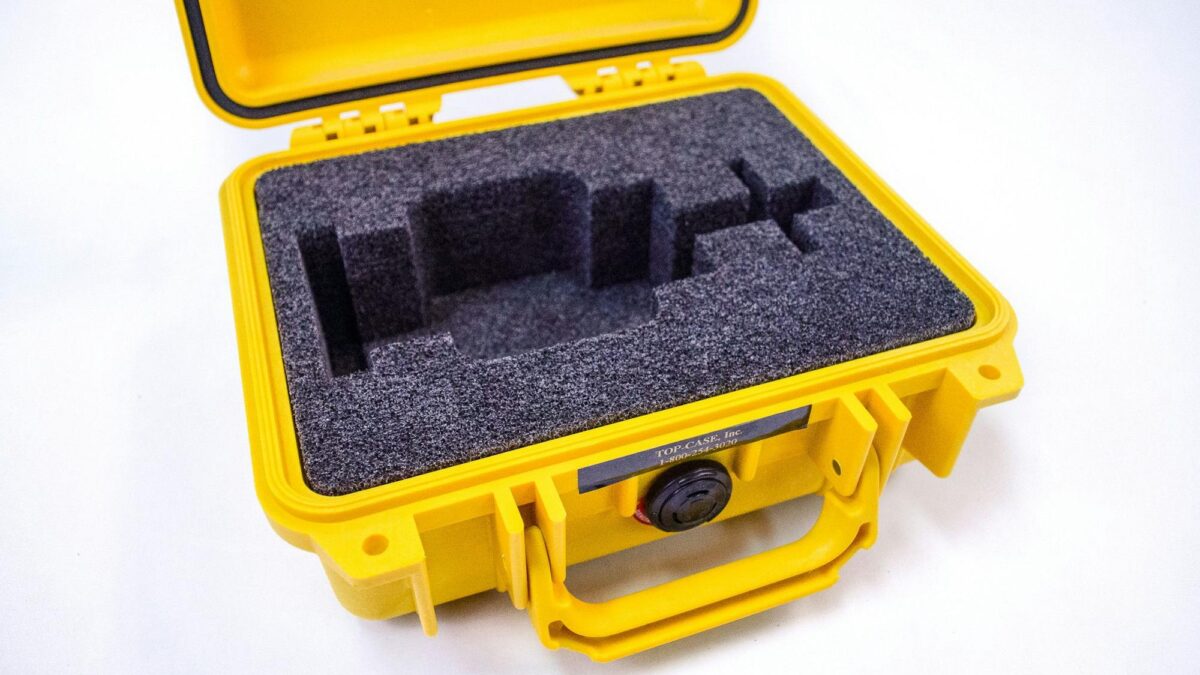
Foam plays a critical role in the packaging industry. It manages the wide range of forces that products experience during shipping, handling, storage, and everyday use. Foam cushions, stabilizes, absorbs impact energy, supports weight, and shields components from environmental and mechanical stress.
Amcon’s engineers choose foam packaging materials that match the exact performance needs of each application. With the correct combination of material selection, density, and fabrication method, foam inserts provide reliable protection for equipment, electronics, medical devices, and precision components.
Amcon works with a full family of engineered foams, including beaded expanded polyethylene (EPE), cross linked polyethylene (XLPE), expanded polypropylene (EPP), polyethylene foam, polyurethane foam, and specialty materials such as neoprene, so each design can balance impact protection, weight, durability, and sustainability.
Forces That Products Encounter
During transport and storage, products interact with several types of forces. Understanding these forces guides the development of protective materials and foam packaging solutions that perform as intended.
- Impact Forces from Drops and Collisions
- Compression Loads During Stacking and Shipping
- Vibration in Transit
- Thermal Variation
- Exposure to Moisture and Chemicals
- Surface Contact and Abrasion
Shock Absorbing Properties of Foam
Foam plays a key role in preventing damage during handling and shipping. Its ability to absorb impact energy depends on material structure, density, and design.
- Beaded Expanded Polyethylene (EPE) foam delivers repetitive dynamic cushioning and strong shock absorption to protect fragile products in transit. Its non-crosslinked structure makes it fully recyclable.
- Cross-Linked Polyethylene (XLPE) foam delivers a refined, uniform cell structure with enhanced durability, chemical resistance, and long-term stability. It performs well in applications requiring clean edges, resilient cushioning, and precision-cut components.
- Expanded Polypropylene (EPP) foam offers strong impact energy management, outstanding shape recovery, and long-term durability. Its resilience makes it ideal for reusable packaging, industrial kits, and components requiring repeated impact protection.
- Polyethylene (PE) foam provides versatile cushioning performance across a broad density range. It combines resilience, chemical resistance, buoyancy, and moisture resistance, supporting many protective packaging and industrial applications.
- Polyurethane (PU) foam offers excellent vibration dampening, comfort, and flexible cushioning characteristics. It conforms well to complex shapes and is commonly used for sensitive electronics, medical devices, and precision equipment.
- Neoprene foam provides durable sealing, water resistance, and vibration control. Its flexibility and environmental stability support applications that combine shock absorption with NVH performance and chemical resistance.
Load Bearing Performance and Compression Control
Compression forces occur during stacking, storage, and transit. Foam density and cell structure influence how well packaging foam maintains its thickness and stability under load.
How Density Controls Structural Performance
- Closed cell foams such as PE, XLPE, EPE, and EPP maintain structural integrity under load, which supports stacked shipments, long storage durations, and tight-tolerance packaging designs.
- Higher-density materials such as XLPE, PE plank, EPP, EPE, and firm PE foams offer higher ILD or CFD values, which provide stronger structural support.
- EVA foam provides durable cushioning combined with resilience, often used where comfort and impact absorption are both priorities.
- Lower-density materials supply softer protective surfaces for fragile products.
Beyond mechanical forces, many applications also require protection from electrical hazards, especially when packaging electronics or precision assemblies.
Static Control and ESD Protection
Electronic assemblies and sensitive components face another risk during handling and shipping. Electrostatic discharge can damage circuitry long before a product reaches the customer. Amcon addresses this challenge with its proprietary permanent ESD foams.
Amcon ESD Foam Solutions
- Stat Line provides stable static dissipative performance for trays, inserts, and reusable packaging that require controlled charge decay.
- Shield Line delivers conductive protection for applications that demand the lowest resistance pathways and maximum ESD safety.
- Soft and Dura Grades allow cushioning performance to match part weight, fragility, and handling frequency while maintaining permanent ESD characteristics.
These materials were developed in-house to replace inconsistent outsourced foam and eliminate issues such as sloughing, temporary coatings, long lead times, and variable quality. Amcon’s permanent ESD foams offer reliable electrical performance, clean machining, and consistent behavior in demanding packaging environments.
Vibration Dampening for Sensitive Products
Vibration contributes to premature wear, loosened components, and calibration drift. Foam inserts help control this motion.
Materials That Manage Dynamic Forces
- Polyurethane foam supplies excellent frequency dampening for lightweight products.
- Beaded Expanded Polyethylene supports vibration control with low weight.
- Expanded Polypropylene foam withstands vibration and repeated impacts, making it suitable for reusable systems and industrial kits.
- Neoprene foam provides durable vibration dampening and sealing performance in applications that combine NVH control, chemical resistance, and long service life.
Thermal and Environmental Protection
Foam packaging materials can regulate temperature, reduce heat transfer, and resist moisture or chemicals.
Closed-Cell Foams for Thermal Insulation
- EPS provides strong insulation for temperature-controlled packaging.
- Expanded polyethylene and expanded polypropylene perform well in applications requiring moderate insulation and dimensional stability.
Closed cell polyethylene and XLPE foams resist hydrolysis and maintain structure in high humidity or wet environments, while elastomeric foams such as neoprene and EPDM combine water resistance with long term durability in outdoor or marine conditions.
Water and Chemical Resistance
- XLPE, polyethylene foam, EPE, and EPP maintain performance in wet or submerged environments.
- Chemically resistant foams such as neoprene, EPDM, silicone, and PVC/nitrile perform well in applications exposed to oils, fuels, solvents, and cleaning agents.
Selecting materials with the correct resistance profile helps sustain performance over time and reduces environmental impact by improving product longevity.
Surface Protection and Cosmetic Preservation
Foam inserts prevent surface wear by securing each component in place. Amcon designs and manufactures custom foam case inserts for high-value electronics, medical devices, and demo kits. With more than 45 years of experience, we engineer precise, high-quality inserts that protect every component. Many customers simply provide the part and our team develops the optimal insert design.
Materials for Surface-Safe Protection
- Expanded polyethylene (EPE) supplies a smooth, Class A surface for painted or polished components and has decades of use in automotive dunnage for high gloss and chrome finishes.
- Soft polyurethane foams provide gentle support for sensitive surfaces.
- Laminated foams and fabric-faced foams improve abrasion resistance and overall presentation.
Motion Control and Stability
Foam packaging designs that control movement help improve performance during transit.
Enhanced Stability Through Precise Fabrication
- CNC routing produces multi-level cavities for complex assemblies.
- Waterjet cutting supports intricate shapes for medical or electronic equipment protection.
- Die cutting supplies consistent, high-volume parts.
- Foam inserts keep each component in a designated location, improving customer satisfaction and reducing damage rates.
Enhanced Performance Through Cross Linked Polyethylene (XLPE) and Other Crosslinked Foams
Chemical and irradiation cross linked foams, including cross linked polyethylene (XLPE), contribute to performance in demanding environments where durability, sealing, and environmental stability are important.
Benefits of Crosslinked Foam
- Higher durability and shape retention
- Uniform cell structure
- Improved chemical and thermal stability
- Reliable performance under mechanical stress
These materials are often used in industrial, automotive, medical, and marine applications. XLPE is commonly selected for applications that require precise gaskets, durable case inserts, multi-layer laminations, and insulation components that must perform reliably over many years of use.
Testing and Performance Standards
ASTM International standards verify how foam behaves under impact, compression, and long-term use. Amcon uses these benchmarks to guide material selection and ensure each packaging design performs predictably under real-world conditions.
- ASTM D3575 – Flexible Cellular Materials. This test measures density, compression, tear strength, and recovery for flexible and semi-rigid foams such as PE, EPE, and XLPE. It helps confirm that inserts retain their shape and cushioning performance during repeated loading, vibration, and extended storage.
- ASTM D1596 – Shock Cushioning Performance. This test evaluates how effectively a foam absorbs impact energy during drops or collisions. The results support decisions about foam density, thickness, and geometry for electronics, medical devices, and fragile assemblies with low damage thresholds.
- ASTM D4168 – Rigid Cellular Plastics. This test assesses impact resistance and thermal behavior for rigid foams such as EPS and high-density PE or EPP. It is especially valuable when packaging must combine structural stability with cushioning in stacked, temperature-controlled, or heavy-load environments.
Why ASTM Matters
ASTM standards help confirm that a foam material:
- Absorbs impact energy as intended
- Maintains thickness under compression
- Performs consistently across varied handling and shipping conditions
By applying ASTM results to each design, Amcon engineers’ protective systems that deliver predictable and validated performance from prototype through production.
Amcon’s Engineering Approach
Every application requires a tailored solution. Amcon evaluates:
- Product size, weight, and fragility
- Impact energy and vibration exposure
- Thermal and chemical conditions
- Organizational and multi-component requirements
- Environmental impact goals, including recyclability, weight reduction, and packaging sizing
- Aesthetic and fit expectations
This results in custom foam packaging that supports manufacturing, transport, and end-user experience.
Build a Protective Foam Packaging Solution with Amcon
Amcon designs and fabricates packaging foam systems for electronics, medical devices, industrial equipment, consumer products, and automotive components. Our foam packaging options include extruded polyethylene foam, beaded expanded polyethylene (EPE), cross linked polyethylene (XLPE), expanded polypropylene (EPP), polyurethane foams, neoprene, and other protective materials engineered to deliver consistent performance from design through delivery.
Contact Amcon Foam to explore design options and select the right foam packaging materials for your application.